Quick answer
Occupational therapy helps children with ADHD with the everyday tasks that attention and impulse control make hard: getting ready in the morning, starting and finishing homework, keeping track of belongings, handwriting, and calming down when they’re overwhelmed. OTs work on executive function skills, self-regulation, sensory needs, and fine motor skills, and they build routines and tools that work at home and school. OT doesn’t diagnose ADHD or replace the medical and behavioral care your pediatrician recommends; it adds practical, skill-based support.
In this article
- Can occupational therapy help a child with ADHD?
- What does OT work on for kids with ADHD?
- Signs your child with ADHD may benefit from OT
- What happens in an OT session for ADHD?
- Simple strategies to try at home
- Does my child need an ADHD diagnosis to start OT?
- Related guides from our pediatric OTs
- Start in-home OT in Greater Houston
If your child has ADHD, or you suspect it, you’ve probably noticed that the hardest moments aren’t always at school. They happen at the breakfast table, during homework, at bedtime, or when plans change. Those daily routines are exactly where a pediatric occupational therapist can help. Our executive function therapy page explains how we approach these skills; this guide covers what OT for ADHD looks like and when to consider it.
Can occupational therapy help a child with ADHD?
Yes. ADHD affects much more than attention. Many children also struggle with organizing tasks, remembering steps, managing frustration, sitting still for written work, or tolerating noise and busy environments. OT looks at how those challenges show up in your child’s real day and builds skills and strategies to make the day run more smoothly.
It’s important to know where OT fits. The American Academy of Pediatrics recommends parent training in behavior management as the first treatment for preschoolers with ADHD, and medication along with behavioral support for most school-age children. OT complements that plan by targeting functional skills, such as routines, handwriting, and self-regulation, that medication and behavior plans don’t directly teach.
What does OT work on for kids with ADHD?
| Area | What it looks like at home or school | How OT helps |
|---|---|---|
| Executive function | Can’t get started, loses track of steps, forgets materials | Visual schedules, checklists, breaking tasks into steps, timers |
| Self-regulation | Big reactions, trouble calming down, hard transitions | Calming strategies, movement breaks, naming feelings and body signals |
| Sensory needs | Constantly moving, crashing, chewing, or overwhelmed by noise | A sensory plan of movement and calming input built into the day |
| Fine motor and handwriting | Messy, slow, or rushed writing; avoids written work | Hand strength, pencil control, letter formation, pacing strategies |
| Daily routines | Morning and bedtime battles, dressing takes forever | Simplified routines, environmental setup, practice in the real setting |
Signs your child with ADHD may benefit from OT
- Morning, homework, or bedtime routines regularly end in meltdowns
- Handwriting is hard to read, very slow, or causes frustration
- Your child seeks constant movement or is easily overwhelmed by sound, touch, or crowds
- They can’t keep track of belongings or the steps of a task, even with reminders
- Teachers mention trouble with seated work, transitions, or organization
- Self-care like dressing, brushing teeth, or packing a bag needs much more help than peers
Many of these overlap with sensory processing difficulties, which are common in children with ADHD. An evaluation can sort out what’s driving the struggle.
What happens in an OT session for ADHD?
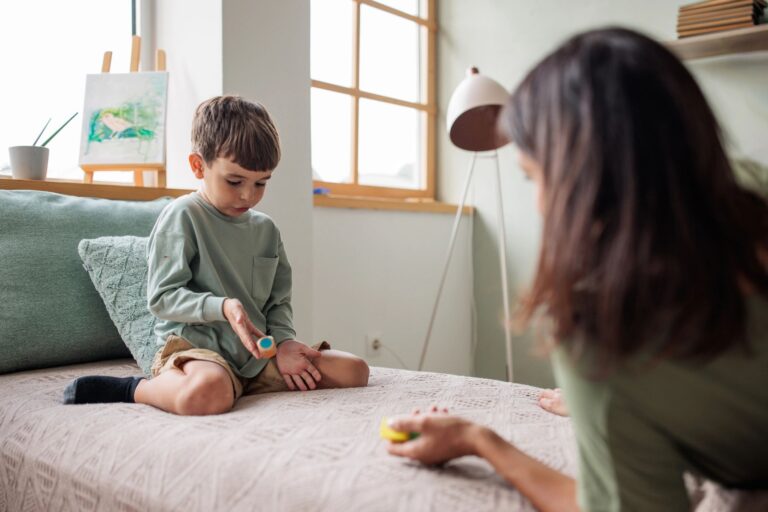
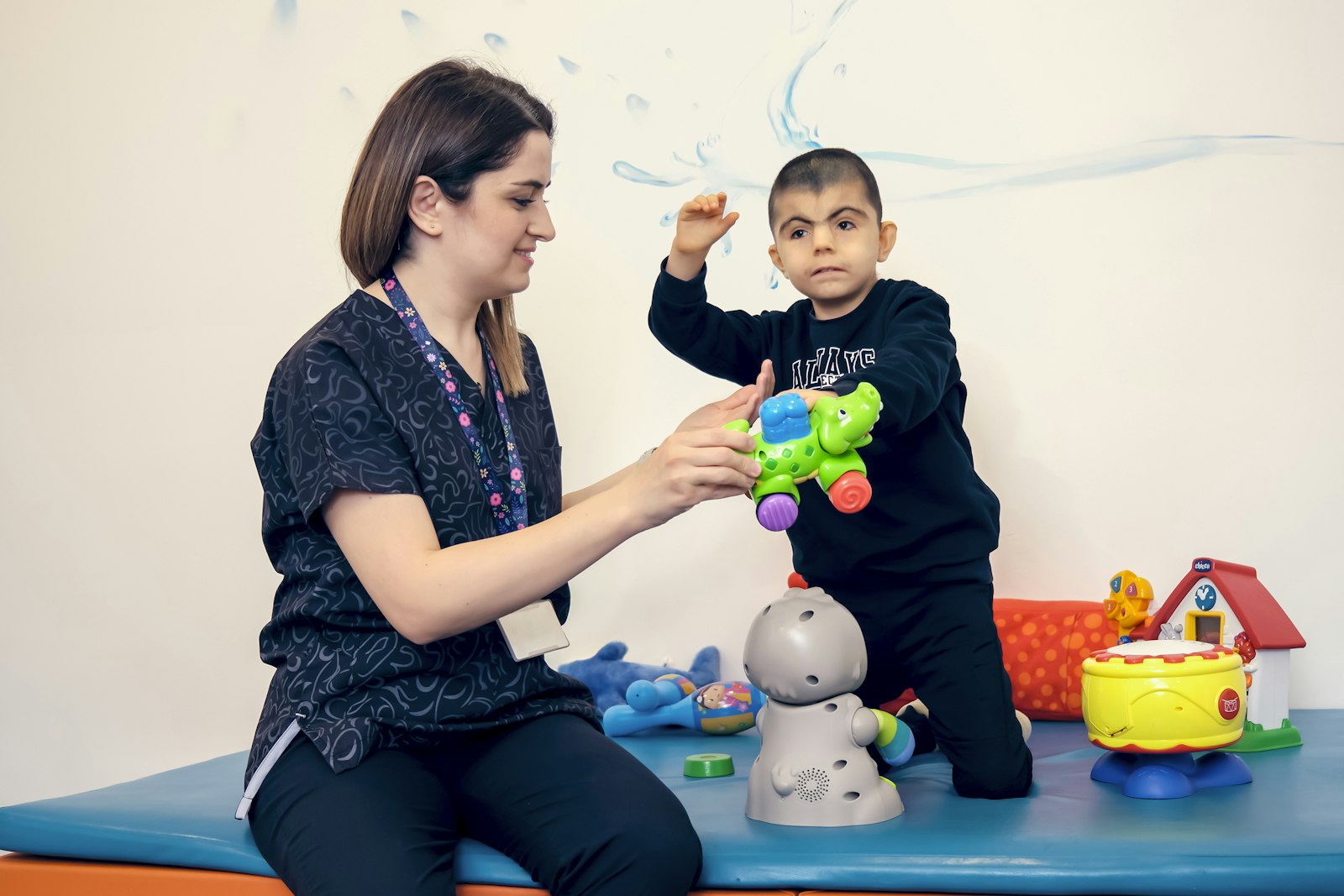
Sessions are active and practical. An OT might start with movement to help your child feel organized, then practice a skill like following a three-step routine, using a checklist to pack a backpack, or writing a short sentence with a strategy to slow down. Throughout, the therapist watches what helps your child focus and regulate, and shares those strategies with you.
With in-home occupational therapy, the work happens where the struggles happen: at your kitchen table during homework, in your child’s bedroom during the morning routine, using your family’s real schedule. That makes strategies easier to keep using between sessions.
Simple strategies to try at home
- Make routines visible. A picture or written checklist for mornings and bedtime reduces reminders and arguments.
- Break it down. Give one or two steps at a time instead of a long list.
- Move before sitting. A few minutes of jumping, carrying something heavy, or wall push-ups before homework can help some children focus.
- Use a timer. Short work periods with planned breaks are easier than open-ended homework time.
- Set up a launch pad. One spot by the door for shoes, backpack, and folders cuts down on lost items.
If writing is a major struggle, see why a child’s handwriting may be messy.
Does my child need an ADHD diagnosis to start OT?
No. OT addresses skills and daily function, not a label. Many families start OT because of struggles with routines, writing, or regulation before or during an ADHD evaluation. In Texas, the occupational therapy licensing board does not require a physician referral for OT for non-medical conditions, and its guidance specifically includes ADHD in that group. Insurance plans may have their own requirements, so check yours.
Can an occupational therapist diagnose ADHD?+
No. ADHD is diagnosed by a physician or psychologist. An OT evaluates skills such as attention to task, motor coordination, sensory processing, and self-care, and builds a plan around the challenges they find.
Is OT a replacement for ADHD medication?+
No. OT is a complement, not a substitute. Decisions about medication belong with your child’s doctor. OT focuses on teaching practical skills and strategies that help with daily routines and school tasks.
How long does OT for ADHD take?+
It depends on your child’s goals. Some families see changes in routines within a few months; skills like handwriting or self-regulation may take longer. Our guide on how long pediatric OT takes explains what affects the timeline.
Do I need a referral to start pediatric OT?+
No referral is required to begin with Collab Therapeutic Services. You can call us directly to schedule an in-home evaluation across Greater Houston.
Related guides from our pediatric OTs
- Sensory processing in kids: signs and how OT helps
- Why is my child’s handwriting so messy?
- How OT helps children with autism
- What happens at a pediatric OT evaluation?
Start in-home OT in Greater Houston
Collab Therapeutic Services brings pediatric occupational therapy to families in Houston, Katy, Sugar Land, Pearland, Cypress, Spring, and The Woodlands. Call (832) 232-3611 or request an intake call.
Treatment recommendations referenced here reflect the American Academy of Pediatrics clinical practice guideline for ADHD; Texas referral information comes from the Texas Board of Occupational Therapy Examiners. This article is educational and not a substitute for an individual evaluation. Last updated November 2026.