
Quick answer A tantrum is usually goal-directed: a child wants something, can still partly control their behavior, and often stops once they get it or realize it isn’t working. A meltdown is a reaction to feeling overwhelmed, often by sensory input, fatigue, or change, and the child can’t stop it […]
Read MorePediatric Occupational Therapy Blog for Houston Parents
Practical, therapist-written guides on child development, sensory processing, fine motor skills, feeding, OT evaluations, and insurance — from the licensed pediatric OTs at Collab Therapeutic Services, serving families in their homes across Greater Houston.
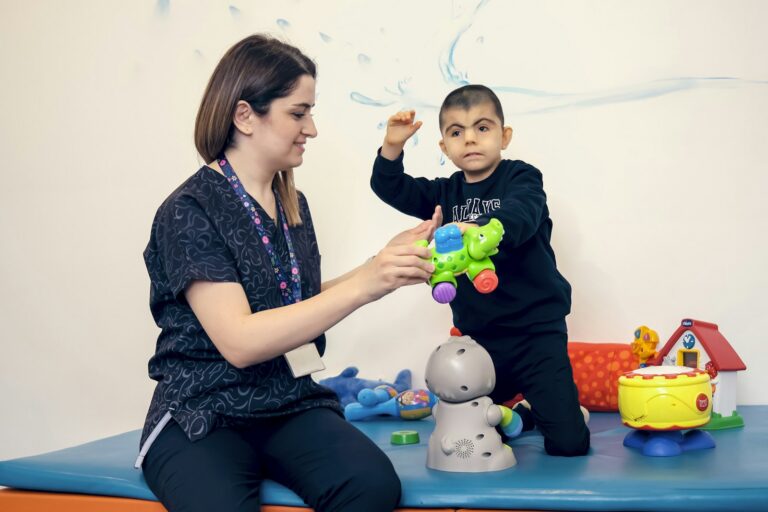
Occupational Therapy for ADHD: How OT Helps Kids Focus, Organize, and Regulate
Quick answer Occupational therapy helps children with ADHD with the everyday tasks that attention and impulse control make hard: getting ready in the morning, starting and finishing homework, keeping track of belongings, handwriting, and calming down when they’re overwhelmed. OTs work on executive function skills, self-regulation, sensory needs, and fine […]
Read More
Sensory Diet for Kids: What It Is and At-Home Activities
What a sensory diet is, how an OT builds one, and calming, alerting, and heavy-work activities you can use at home, with a sample daily schedule.
Read More
Fine Motor Milestones by Age: A Parent’s Checklist (and When to Consider OT)
Quick answer Fine motor skills develop in a predictable order, but on a flexible timeline. By age 1 most children use a pincer grasp; by 3 they copy a circle and stack blocks; by 5 they cut shapes and write some letters. Ranges are typical, not pass-fail. If your child […]
Read More
Occupational Therapy for Toddlers: Signs to Watch and What Sessions Look Like
Quick answer Occupational therapy for toddlers helps children ages 1 to 3 build the skills behind everyday routines: feeding themselves, playing with toys, early dressing, and coping with sensory input and transitions. Signs worth checking include not finger-feeding or trying a spoon by about 18 months, avoiding touching foods or […]
Read More
OT vs. Speech vs. Physical Therapy for Kids: Which Does My Child Need?
Quick answer Occupational therapy (OT) helps children do everyday tasks: using their hands, dressing, eating, handling sensory input, and staying regulated. Speech therapy helps with talking, understanding language, social communication, and sometimes swallowing. Physical therapy (PT) helps with big-body movement: walking, balance, strength, and coordination. Many children benefit from more […]
Read More
How Long Does Pediatric Occupational Therapy Take? A Parent’s Timeline
How long pediatric OT takes depends on goals, needs, and practice at home. A Houston pediatric OT explains typical frequency, the treatment timeline, Medicaid authorization, and when therapy ends.
Read MoreWhy Is My Child’s Handwriting So Messy? When to See an OT
Messy handwriting is often normal, but pain, avoidance, or no improvement are red flags. A Houston pediatric OT explains causes, how OT helps, and home activities.
Read More
How Occupational Therapy Helps Children With Autism: A Houston Parent’s Guide
How occupational therapy helps autistic children with sensory regulation, self-care, feeding, motor skills, and routines, how OT differs from ABA and speech therapy, and what in-home OT looks like in Houston.
Read More
ECI vs. Private Pediatric OT in Texas: What Houston Parents Should Know
Texas ECI serves children birth to 36 months with a qualifying delay; private pediatric OT has no age cutoff or threshold. A Houston OT compares eligibility, cost, what happens at age 3, and how to choose.
Read More